
5.2 KiB
Introduction to BotServer
Build conversational AI bots in minutes, not months. BotServer lets you create intelligent chatbots by writing simple BASIC scripts and dropping in your documents. No complex frameworks, no cloud dependencies, no AI expertise required.
Quick Example
Want a student enrollment bot? Here's all you need:
- Drop your documents in a folder:
edu.gbkb/
  enrollment-policy.pdf
  course-catalog.pdf
- Write a simple tool (optional):
' enrollment.bas
PARAM name, email, course
SAVE "enrollments.csv", name, email, course
TALK "Welcome to " + course + "!"
- Chat naturally:
User: I want to enroll in computer science
Bot: I'll help you enroll! What's your name?
User: Sarah Chen
Bot: Welcome to Computer Science, Sarah!
The Flow
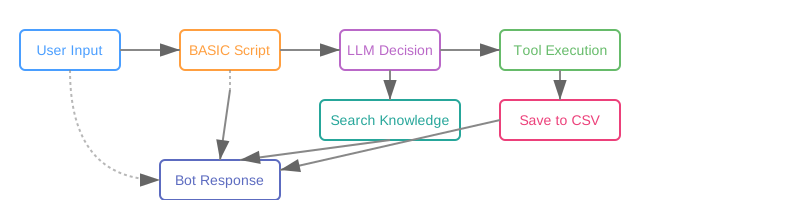
The AI handles everything else - understanding intent, collecting information, executing tools, answering from documents. Zero configuration.
What Makes BotServer Different
Just Run It
./botserver
That's it. No Kubernetes, no cloud accounts. The bootstrap process installs everything locally in 2-5 minutes. PostgreSQL, vector database, object storage, cache - all configured automatically with secure credentials.
Real BASIC, Real Simple
Remember BASIC from the 80s? We brought it back for conversational AI:
' save-note.bas - A simple tool
PARAM topic, content
SAVE "notes.csv", topic, content, NOW()
TALK "Note saved!"
Four lines. That's a working tool the AI can call automatically.
Documents = Knowledge
Drop PDFs, Word docs, or text files into .gbkb/ folders. They're instantly searchable. No preprocessing, no configuration, no pipelines. The bot answers questions from your documents automatically.
Tools = Functions
Create .bas files that the AI discovers and calls automatically. Need to save data? Send emails? Call APIs? Just write a tool. The AI figures out when and how to use it.
Architecture at a Glance
BotServer is a single binary that includes everything:
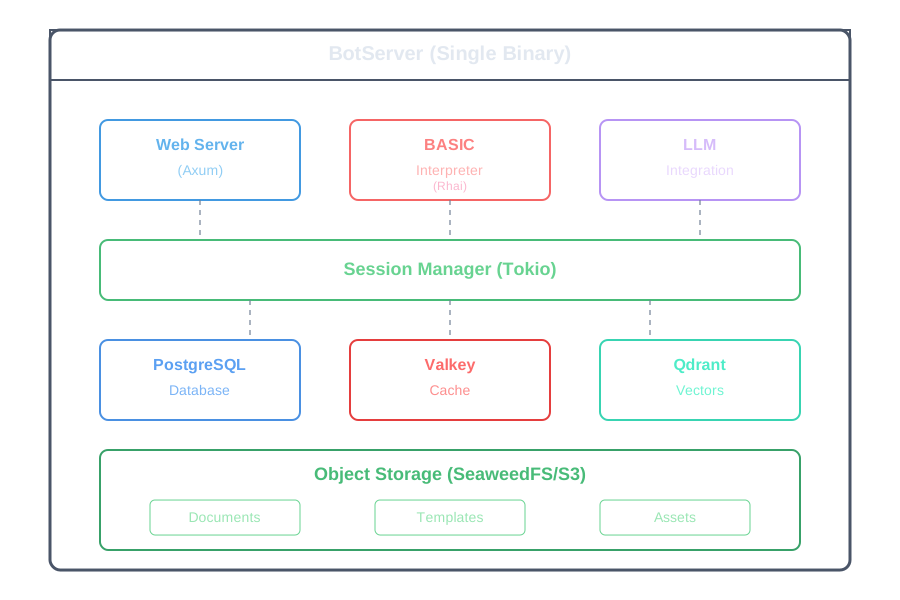
One process, one port, one command to run. Deploy anywhere - laptop, server, container.
Real-World Use Cases
Customer Support Bot
documents: FAQs, policies, procedures
tools: ticket creation, status lookup
result: 24/7 support that actually helps
Employee Assistant
documents: HR policies, IT guides, company info
tools: leave requests, equipment orders
result: Instant answers, automated workflows
Sales Catalog Bot
documents: product specs, pricing sheets
tools: quote generation, order placement
result: Interactive product discovery
Meeting Assistant
documents: agenda, previous minutes
tools: action item tracking, scheduling
result: AI-powered meeting facilitator
The Package System
Bots are organized as packages - just folders with a naming convention:
my-bot.gbai/                    # Package root
├── my-bot.gbdialog/            # BASIC scripts
│   └── start.bas               # Entry point
├── my-bot.gbkb/                # Knowledge base
│   ├── policies/               # Document collection
│   └── procedures/             # Another collection
└── my-bot.gbot/                # Configuration
    └── config.csv              # Bot settings
How It Works
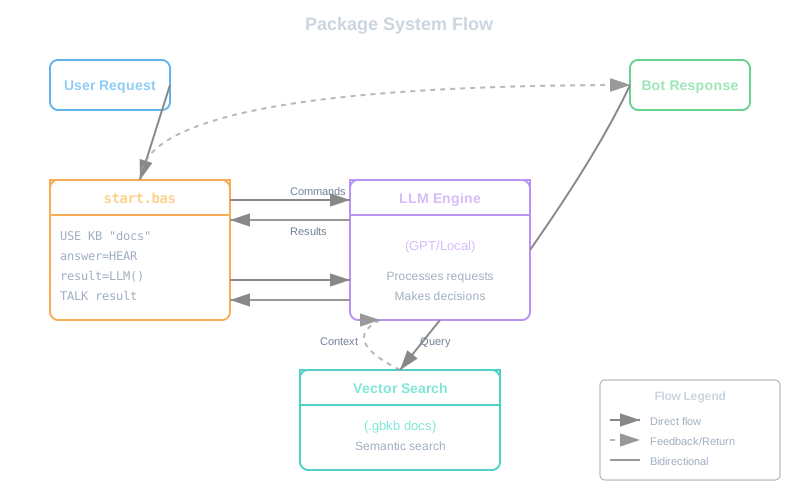
That's it. No XML, no JSON schemas, no build process. Copy the folder to deploy.
Getting Started in 3 Steps
1. Install (2 minutes)
wget https://github.com/GeneralBots/BotServer/releases/latest/botserver
chmod +x botserver
./botserver
2. Open Browser
http://localhost:8080
3. Start Chatting
The default bot is ready. Ask it anything. Modify templates/default.gbai/ to customize.
Core Philosophy
- Simplicity First - If it needs documentation, it's too complex
- Everything Included - No external dependencies to manage
- Production Ready - Secure, scalable, enterprise-grade from day one
- Developer Friendly - Clear errors, hot reload, great debugging
- AI Does the Work - Don't write logic the LLM can handle
Technical Highlights
- Language: Written in Rust for performance and safety
- Database: PostgreSQL with Diesel ORM
- Cache: Valkey (Redis-compatible) for sessions
- Storage: S3-compatible object store
- Vectors: Qdrant for semantic search
- Security: Argon2 passwords, AES encryption
- LLM: OpenAI API or local models
- Scripting: Rhai-powered BASIC interpreter
What's Next?
- Chapter 01 - Install and run your first bot
- Chapter 02 - Understanding packages
- Chapter 05 - Writing BASIC dialogs
- Templates - Explore example bots
Community
BotServer is open source (AGPL-3.0) developed by Pragmatismo.com.br and contributors worldwide.
- GitHub: https://github.com/GeneralBots/BotServer
- Version: 6.0.8
- Status: Production Ready
Ready to build your bot? Turn to Chapter 01 and let's go!